Long-Term Paint Protection That Lasts Years
Ceramic Coating in Caledonia for two to five year paint protection on properly prepared vehicle surfaces
Road salt, UV exposure, and acidic contaminants like bug residue and bird droppings damage clear coat continuously during normal driving, creating a dull appearance and permanent etching if left untreated. Ceramic coating application creates a chemically bonded protective layer that resists these contaminants and reduces paint degradation for two to five years depending on product tier and maintenance. Midwest Shine Mobile Detailing LLC measures paint thickness before application, performs clay bar decontamination to remove embedded particles, prepares each panel properly, and applies ceramic coating on vehicles throughout Caledonia and expanding into the Rochester area where premium service demand justifies travel distance.
Two-step ceramic coating involves paint correction to remove existing swirls and scratches before coating application, while one-step application works on new vehicles with paint that does not require correction. Paint thickness measurement determines how much correction the clear coat can safely handle, preventing burn-through on edges and body lines where factory paint runs thinner than on flat panels.
Schedule a ceramic coating consultation to review your vehicle's paint condition and protection options.
What Changes After Ceramic Application
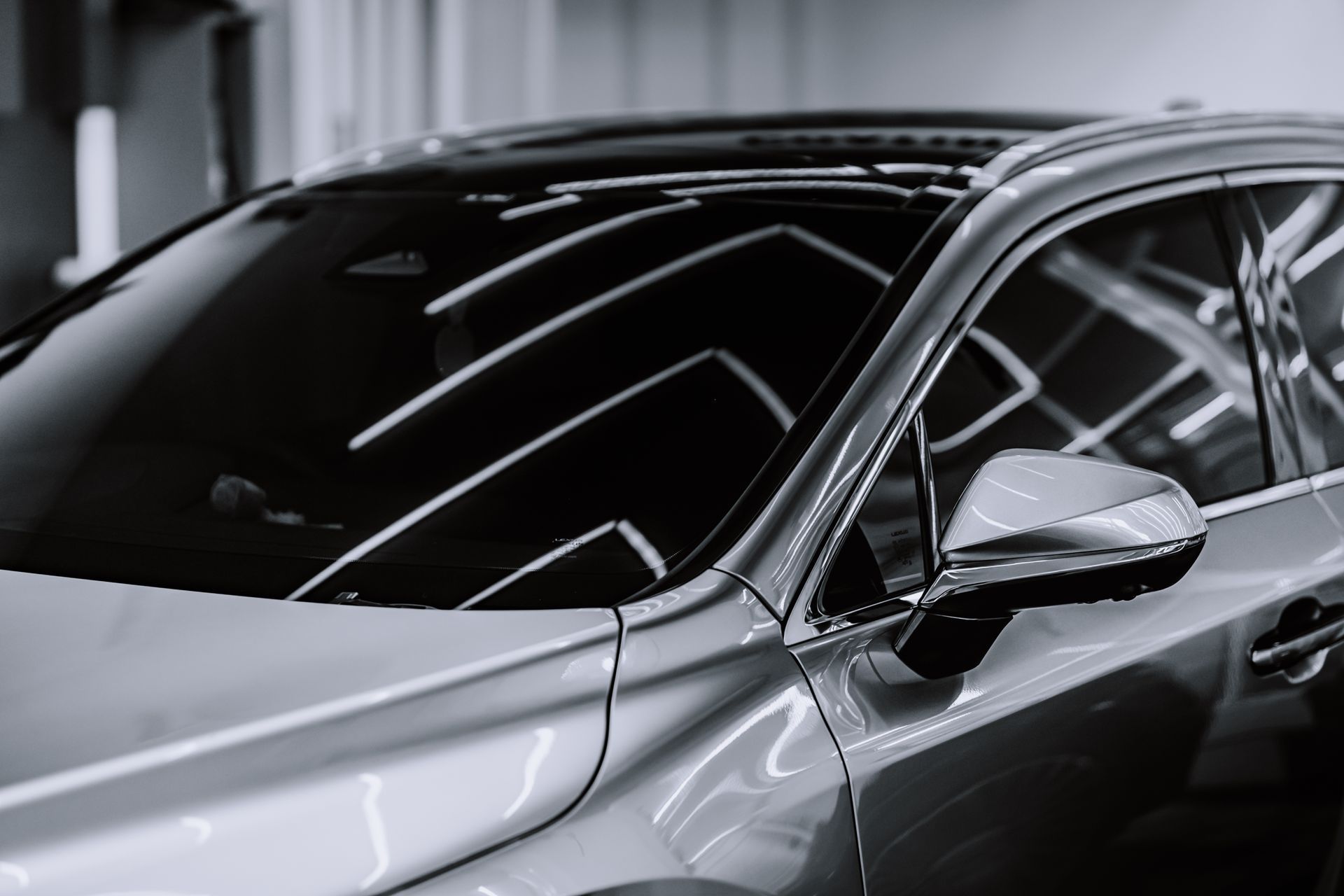
Ceramic coating application requires proper panel preparation because the coating bonds chemically to whatever surface condition exists at the time of application, locking in swirls and contamination if those defects are not removed first. Clay bar decontamination removes bonded particles that create surface roughness, panel prep eliminates oils and residues that prevent chemical bonding, and the coating itself forms a hard, hydrophobic layer that changes how water and contaminants interact with the paint.
Water beads tightly and sheets off coated panels during rain or washing, carrying loose dirt with it instead of allowing sediment to bond to the surface. Bug residue, bird droppings, and tree sap release more easily because they cannot etch through the ceramic layer to reach the clear coat underneath, and the paint maintains gloss longer between washes because the coating resists the fine scratching that occurs during normal contact with dust and debris.
Ceramic coating does not eliminate the need for washing, but it reduces how often deep cleaning is required and makes maintenance washing faster because contaminants do not bond as aggressively. Three recent ceramic jobs have been booked at the time of this service description, including a Saturday appointment, a Corvette restoration consultation, and recurring work through a Spring Grove dealership partnership, with Google Ads generating qualified leads from customers seeking premium protection..
Questions Before Starting Your Project
Ceramic coating inquiries often address cost differences, preparation requirements, and how the protection compares to traditional waxing or sealant application.
Why does ceramic coating require paint thickness measurement before application?
The gauge identifies panels with thin clear coat or previous bodywork where correction steps could break through to primer, allowing the detailer to adjust the process and avoid permanent damage.
What is the cost difference between one-step and two-step ceramic coating?
Two-step coating includes paint correction to remove swirls and scratches before application, adding labor and materials compared to one-step application on new vehicles that do not require correction, with pricing reflecting the additional preparation time.
How does ceramic coating perform in Midwest winter conditions with road salt?
The hydrophobic layer prevents salt brine and de-icing chemicals from bonding directly to clear coat, reducing the chemical etching that occurs when contaminated water evaporates and leaves concentrated residues on unprotected paint.
Can ceramic coating be applied over existing wax or sealant?
No, all previous protection must be removed during panel prep because wax and sealant prevent the ceramic coating from bonding chemically to the clear coat, which causes premature failure and uneven coverage.
What maintenance does ceramic coating require after application?
Coated vehicles still require regular washing to remove dirt and contaminants, though the process becomes easier and less frequent, with some coating products benefiting from periodic booster spray application to maintain hydrophobic properties.
Midwest Shine Mobile Detailing LLC provides ceramic coating with base pricing demonstrated by an eight-hundred-dollar application on a new truck, with correction-inclusive packages available for older vehicles requiring paint restoration. Request a detailed ceramic coating estimate based on your vehicle's year, condition, and protection goals.